
Phase-field · WebGPU
Watch metal freeze.
A phase-field solidification lab, live in your browser. Grow dendrites, pour alloys, read the grains.
Growth
It grows in branches.
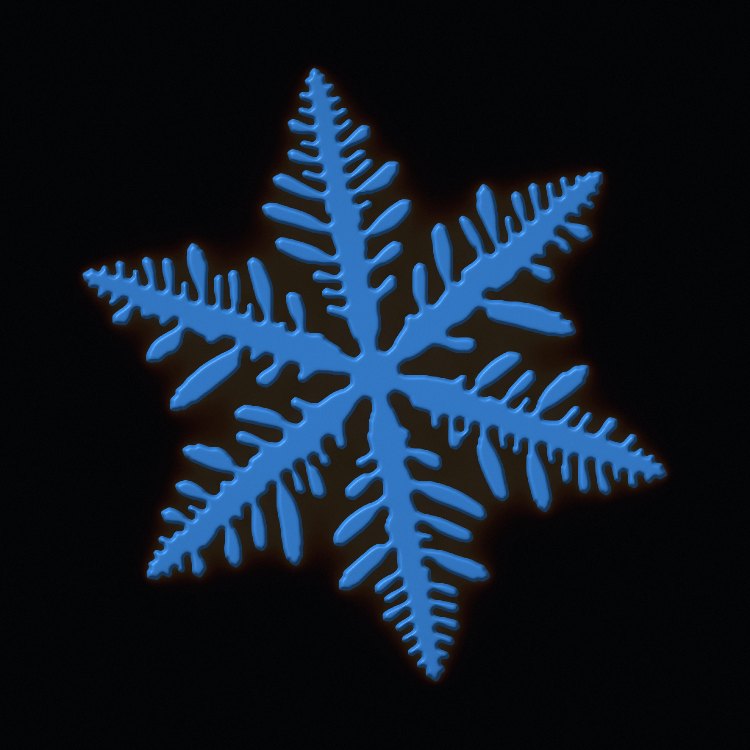
A metal crystal freezing out of its melt does not stay a ball. It sends arms out along the directions its lattice prefers.
Branching
Arms grow on arms.
Side arms sprout along each main arm, and smaller arms branch off the side arms, all along the same cube axes.
Cooling
Then it cools.
The render stops growing here. In a real casting the arms keep thickening and coarsening while melt remains.
The whole crystal
One seed, one crystal.
Every arm grew from the first speck, and all of them share one lattice.
The instrument
Grow your own.
The instrument solves the phase-field equations on your GPU. Change the melt and the branches change.
One casting · ten lenses
02 / 10ORIENT
Polarized light: every grain shows in its own color.
Melt types
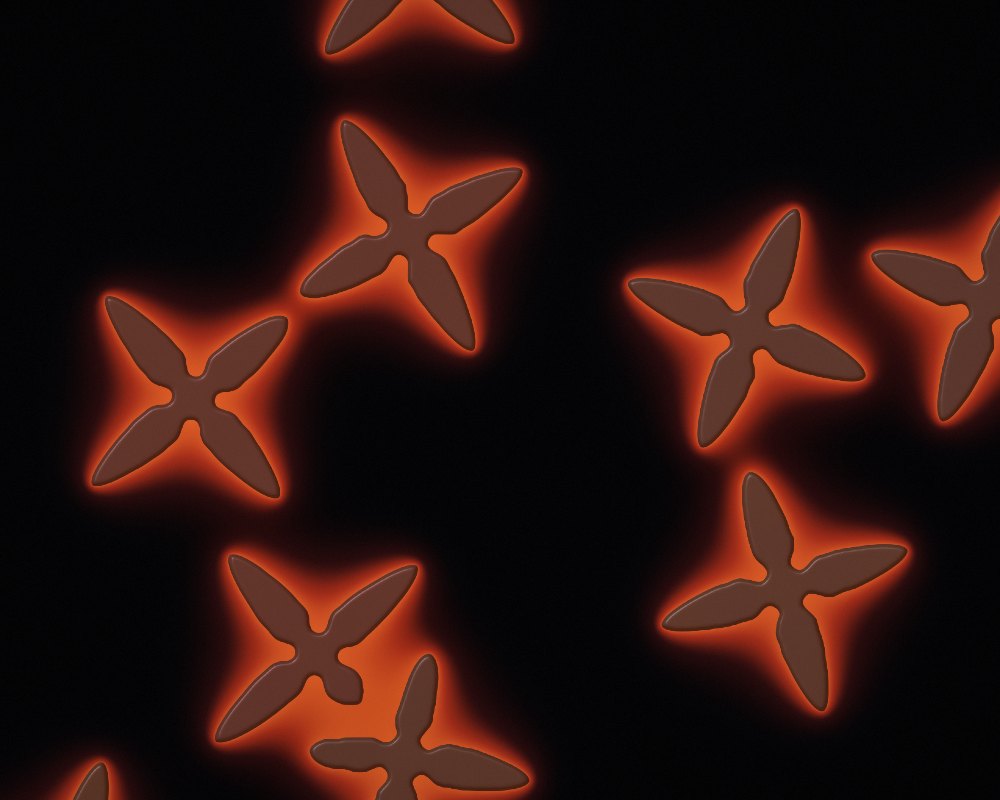
01 / 04Steel
It pours white-hot, the brightest melt in the instrument.
The third dimension
TRUE 3D
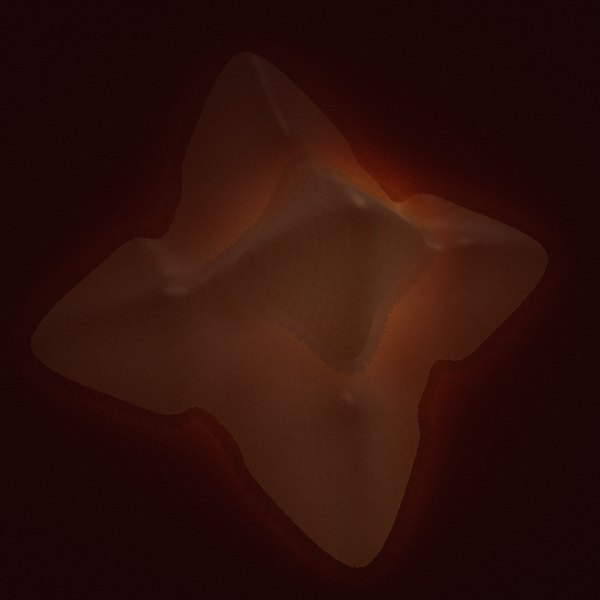
A cubic crystal grows six arms, not four. In the instrument you can section the volume, x-ray it for porosity and export it as an STL.
The bars are liquidus depressions, not grain counts; an earlier grain-count comparison here was withdrawn, and the science page has the record.
Alloy composer
A356 + TiB
Add elements to a base metal by weight. The composer reports the liquidus shift, Q and where the mix sits on its phase diagram.
- growth restriction factor Q
- 71K
- the pour
- Si 7.0wt%
- equilibrium leaves
- (Al) + (Si)
The science
No scripts. No particles.
The crystal and the heat around it are two coupled fields, solved cell by cell on your GPU. Pour an alloy and a third field, the solute, joins them.
- phase field φ
- τ ∂φ/∂t = ∇·(ε²∇φ) + φ(1−φ)(φ−½+m)
- heat T
- ∂T/∂t = ∇²T + K ∂φ/∂t
- phase-field model
- Kobayashi (1993), anisotropic
- alloy
- Warren–Boettinger, dilute
- grain size
- ASTM E112
- emergent
- CET, recalescence, twin competition